
The following works featured in the Parker Contemporary booth. Sydney Contemporary 3 – 6 September 2026 at Carriageworks in Sydney
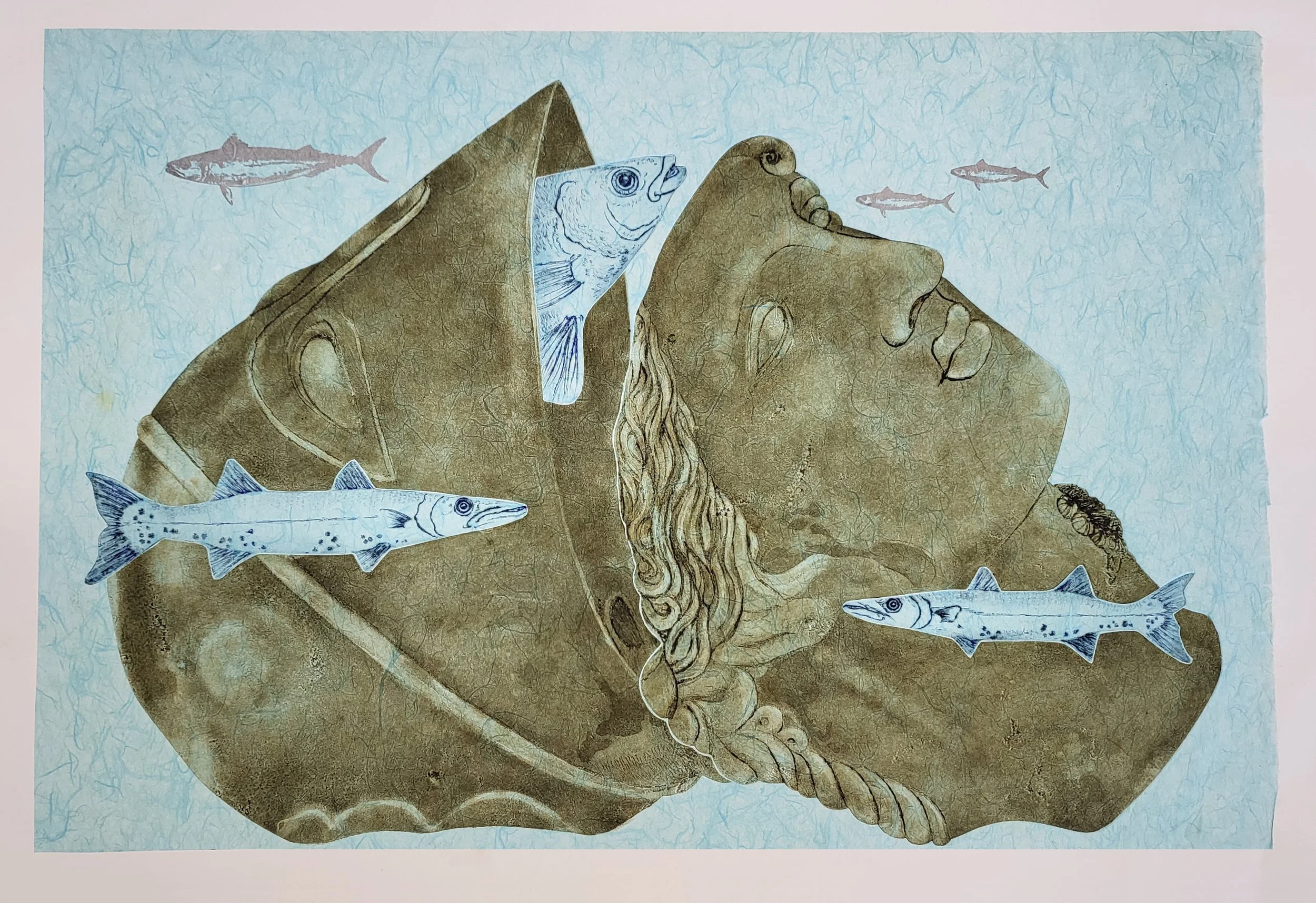
Ross Woodrow Athena in Fish Lane 2026 etching and aquatint five copper plates with relief, Chine collé on light blue wagami unryu paper over Hahnemühle; sheet 74 x 95 cm
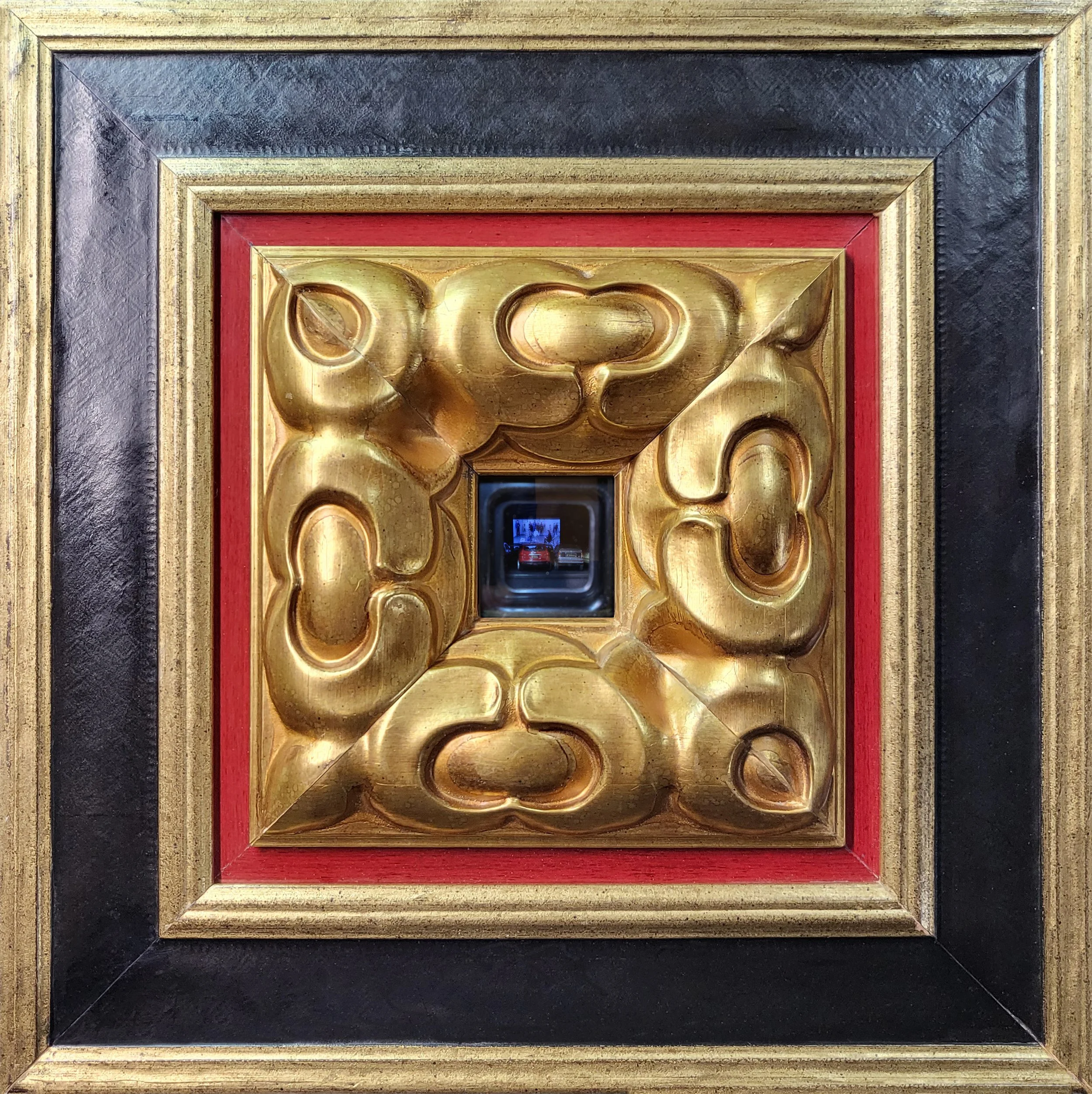
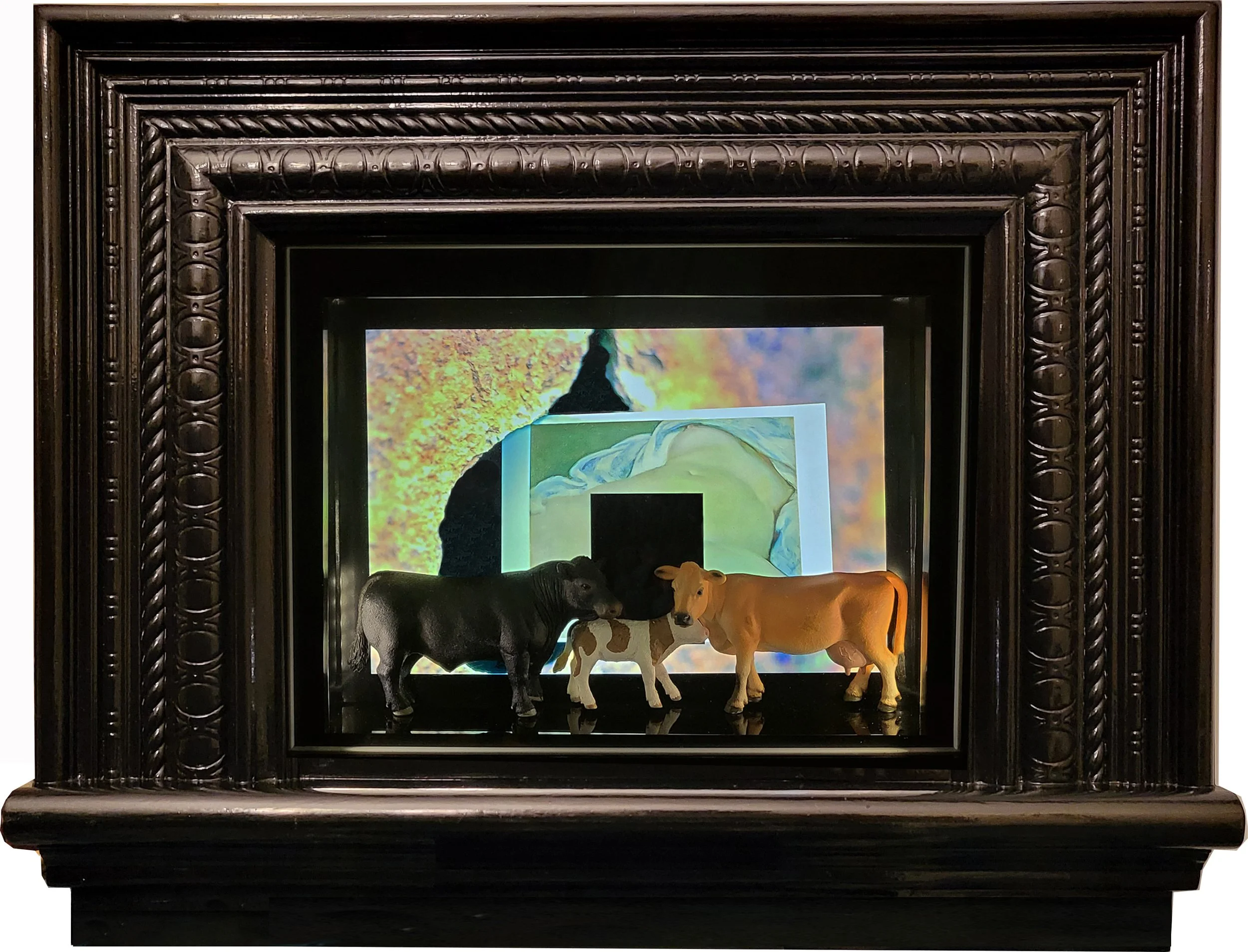
Ross Woodrow Extinction of Pictures 2026 (43.5 x 43.5 x 9 cm.) Mixed mediums; Italian moulding and embossed leather frame, mirrors, 18 HO scale cars, assorted figures. MP4 player. Looped videos; Andrew Frost performance Webb Gallery, Brisbane 2018, Tasmanian Tiger, Tasmanian Museum and Art Gallery Hobart 2015, Statuary pavilion Ballarat Botanic Gardens 2012.
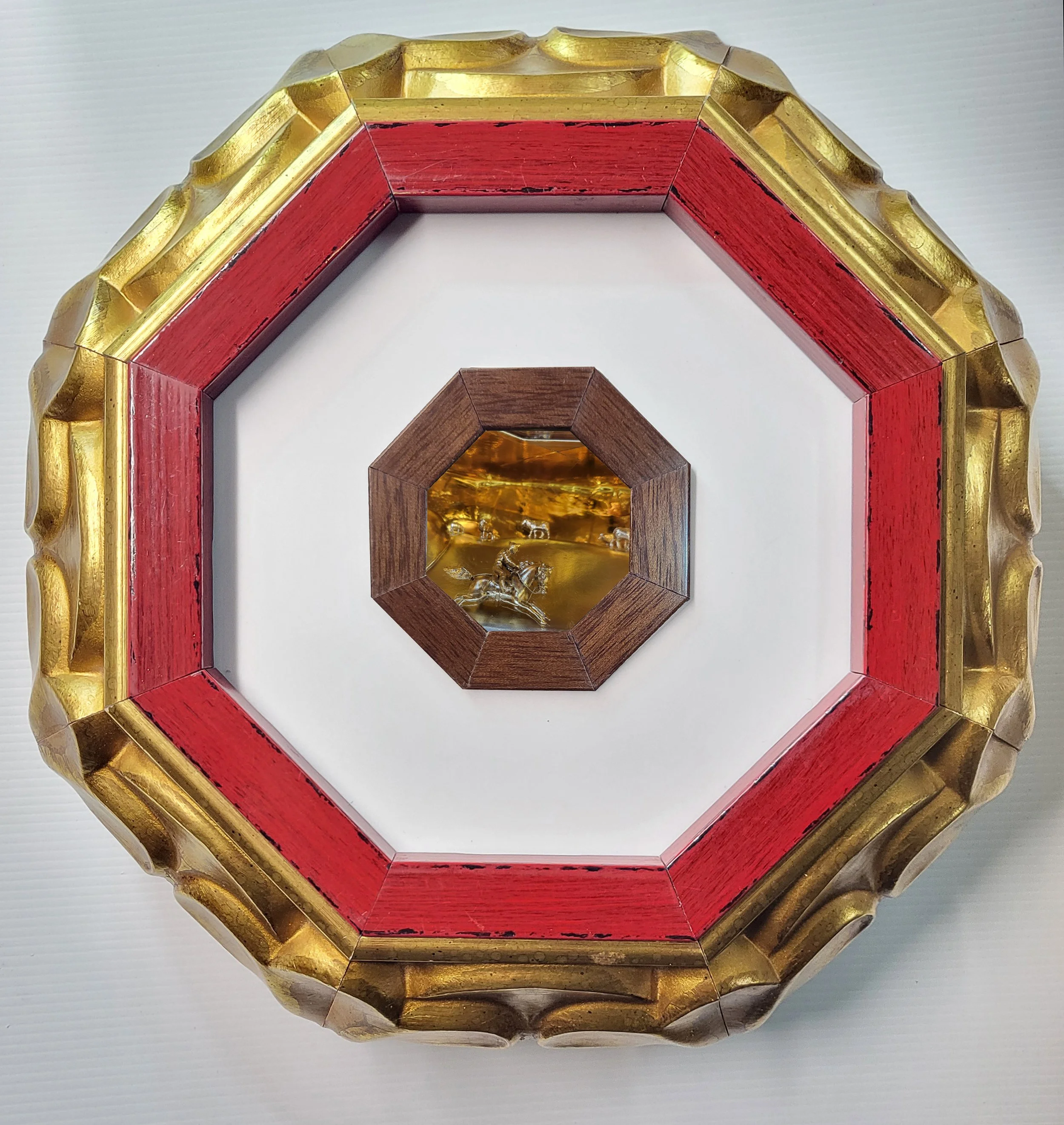
Ross Woodrow Golden Fleece 2026 (29 x 29 x 9cm) mixed mediums, gilded sheep, horse & rider, mirror, internal illumination 1.2 volt LEDs (remote controlled)
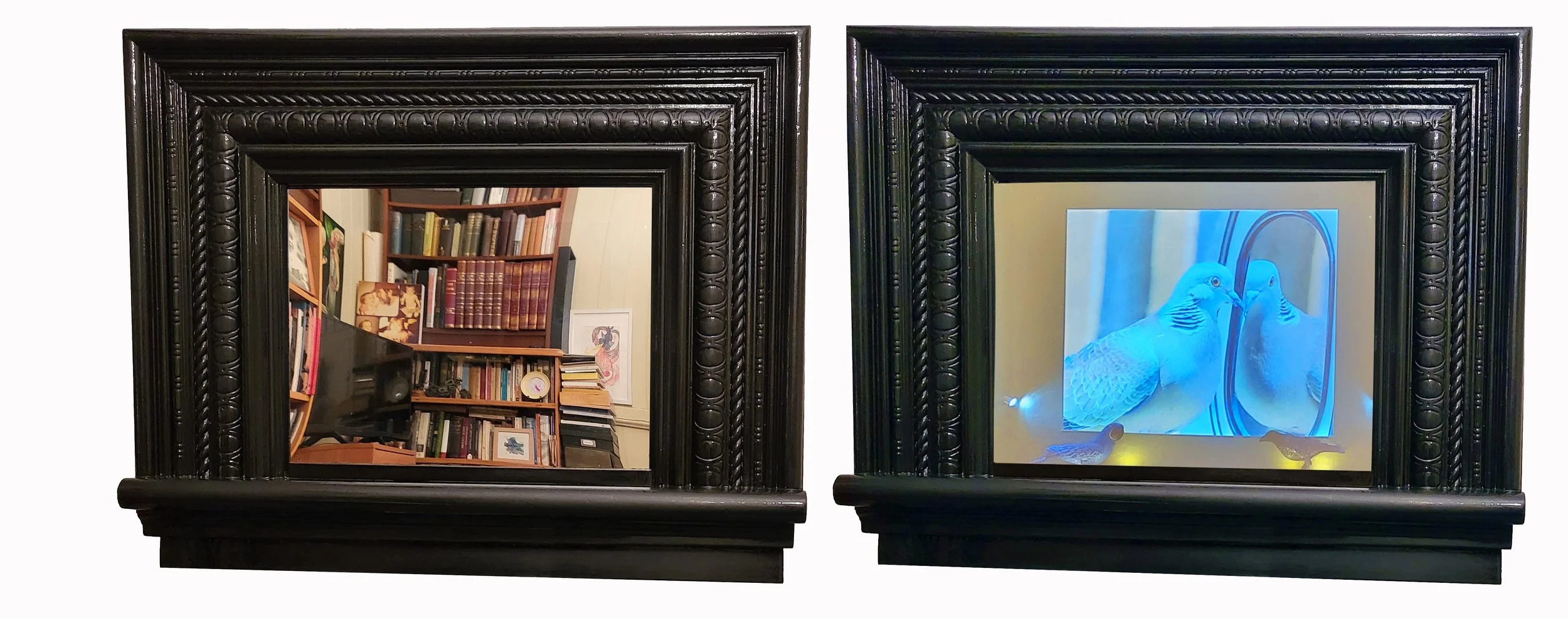
Ross Woodrow Lacan’s Mirror Stage One 2026 Digital print on transparency, two-way mirror, backlit tablet, LED lights and black Japan frame. (48 x 58 x 8 cm. mirror area: 24 x 32 cm.) Left image mirror only. Right image backlighting activated.
The next image is Lacan’s Mirror Stage Two 2026 which is an identical pair to the first and presents as a mirror and transforms to the image shown when the back lighting is switched on. [artist’s statement follows to put these into context]
Artist’s statement
Lacan’s Mirror Stage One and Lacan’s Mirror Stage Two
When French psychoanalyst Jacques Lacan (1901–1981) wrote about his “Mirror Stage,” he was using the term “stage” to describe a phase or step in the development of self-identity. Today, Lacan’s notions are perhaps best dealt with as theatre. In the 1980s, his speculations still carried the weight of theory, offering some legitimacy to Freud’s fading psychoanalysis in its attempts to deal with psyche, soul and sex. This often meant distinguishing the constructional from the biological aspects of gender, while Lacan’s grounding of identity in language seemed progressive.
Every university seemed to have copies—usually multiple copies—of Lacan’s Écrits, with its opening essay on the Mirror Stage, describing an infant’s recognition of its identity as a separate self in a mirror at around six to eighteen months of age. The proposition was both ridiculous and compelling, particularly when many Australians knew of the budgerigar’s attraction to its mirrored self. Lacan referred to earlier experiments in which a female pigeon would ovulate only when presented with its own reflection in a mirror (or, of course, another pigeon). Contradicting such examples, monkeys soon tire of looking at themselves in a mirror, while other mammals, such as cattle, have very little access to mirrored environments.
Lacan might surely have been read in a different tone had it become common knowledge that, for decades, he secretly owned one of the most scandalous paintings in the history of French art: Courbet’s 1866 L’Origine du monde, a woman made anonymous through the reduction of her body to a vulva. Ten years after his death, Lacan’s widow settled various estate and tax debts through the sale of the Courbet to the Musée d’Orsay. When it went on display in 1995, I visited the museum and purchased a postcard.
In April 2000, when I had the opportunity to visit an Aboriginal engraving site at Euriowie in the Mootwingee National Park in NSW, I took the Courbet postcard, L’Origine du monde, because I knew I could pair it with a vulva created perhaps 20,000 years ago by the artists who engraved the rock formations there. I took only two photographic slides with my Minolta, hoping that some enlightenment might inform a work of art.
Only now, twenty-six years later, with the fading of the Lacanian star, can I make sense of it. Theories, after all, only have sustaining value as visual crystallisations, as here.

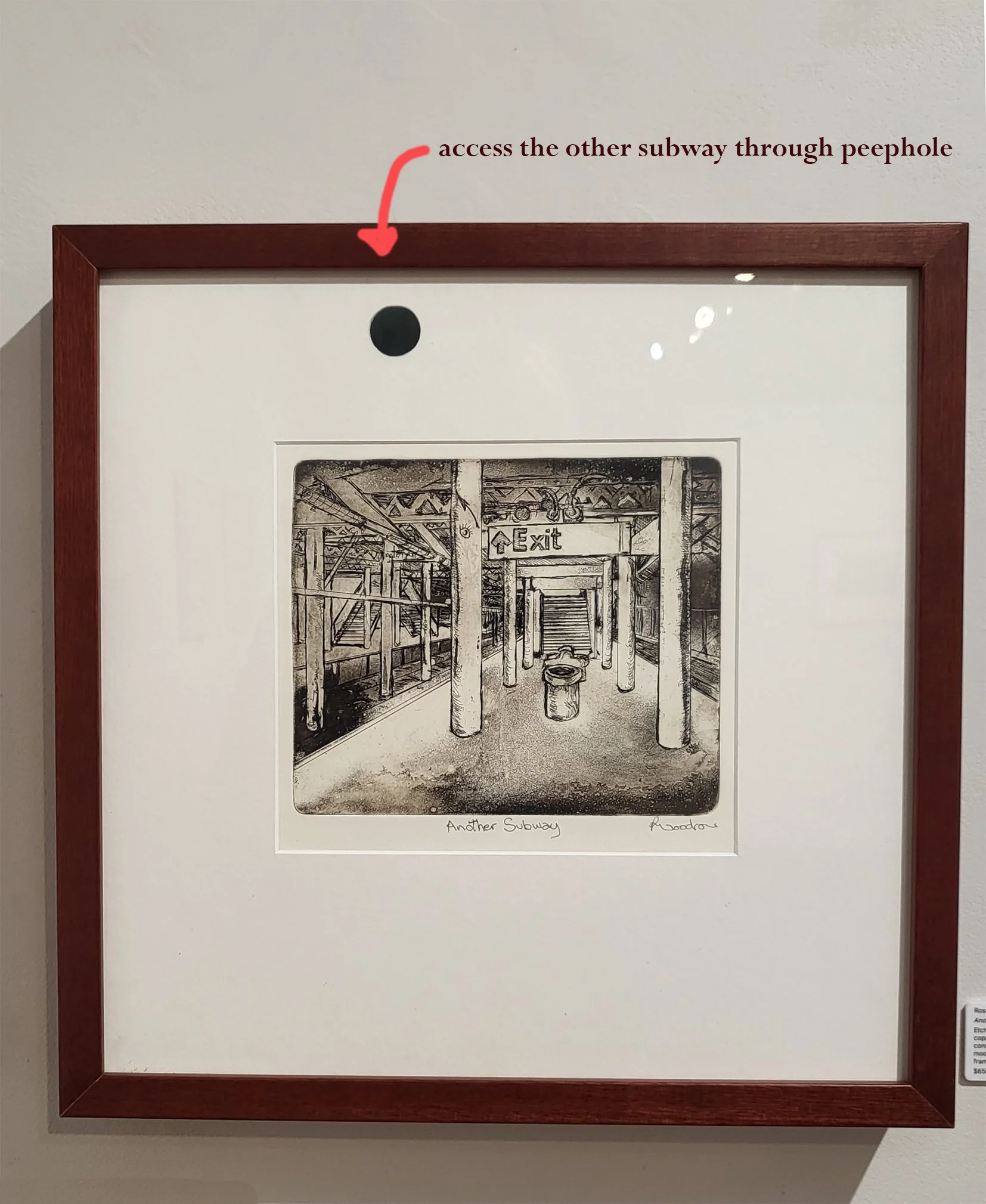
Shown in Deep Marks exhibition at Woolloongabba Art Gallery Brisbane. ( 7 - 28 Feb) Title: Another Subway 2026, etching on Dutch etching paper, plate 16 x 19 cm. Box construction c 40 x 40 cm contains mirrors, acrylic painted figures, LED light.
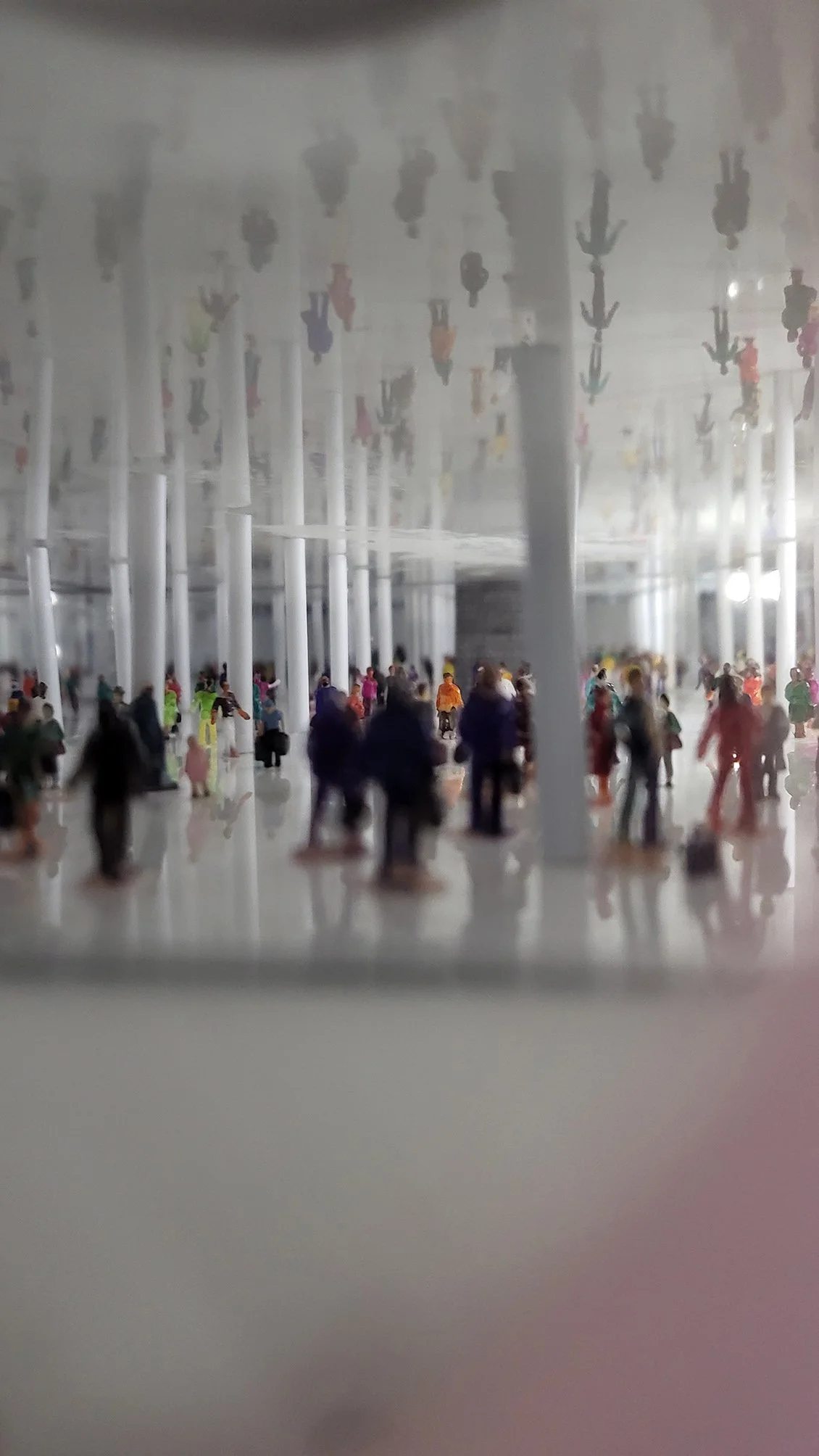
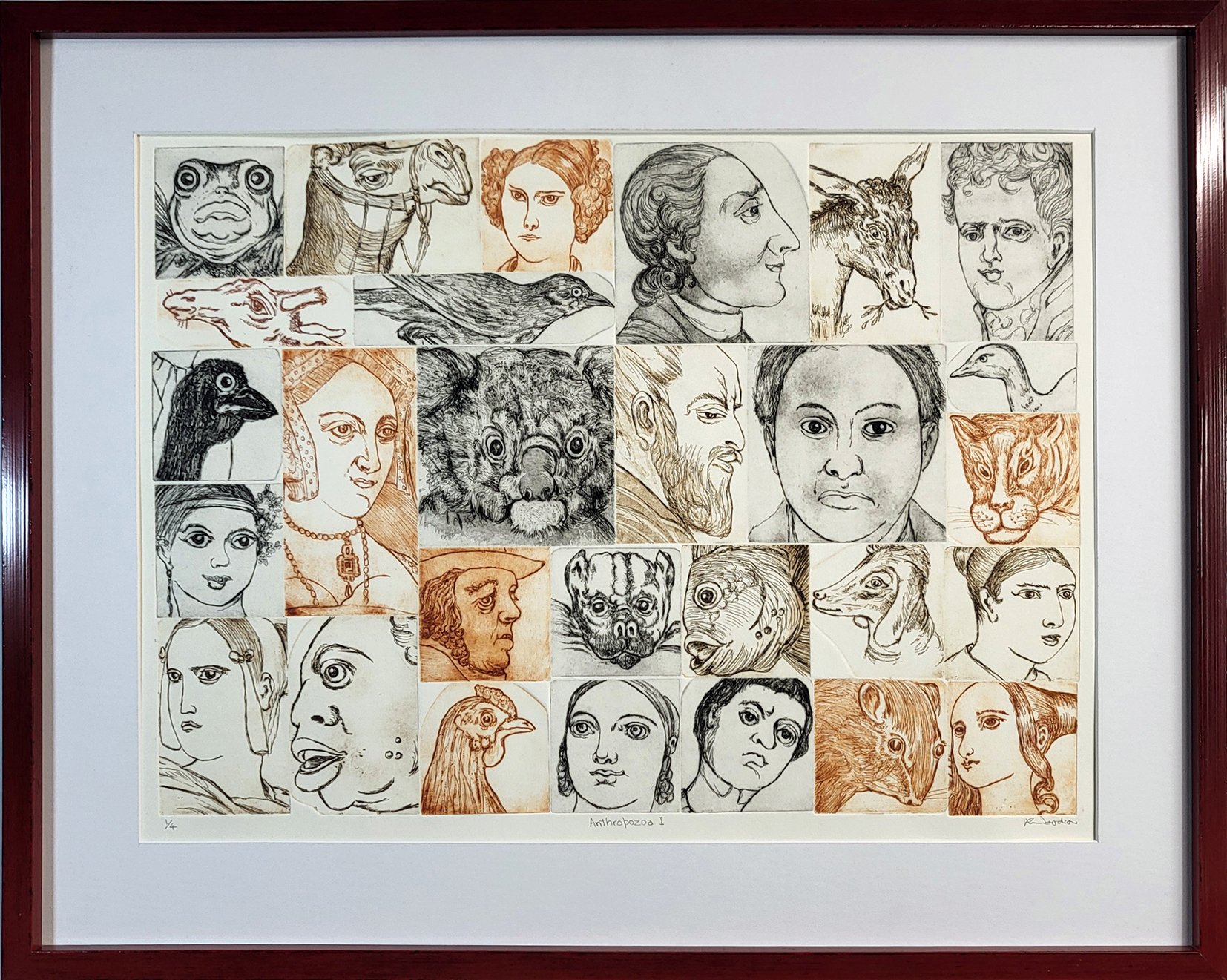
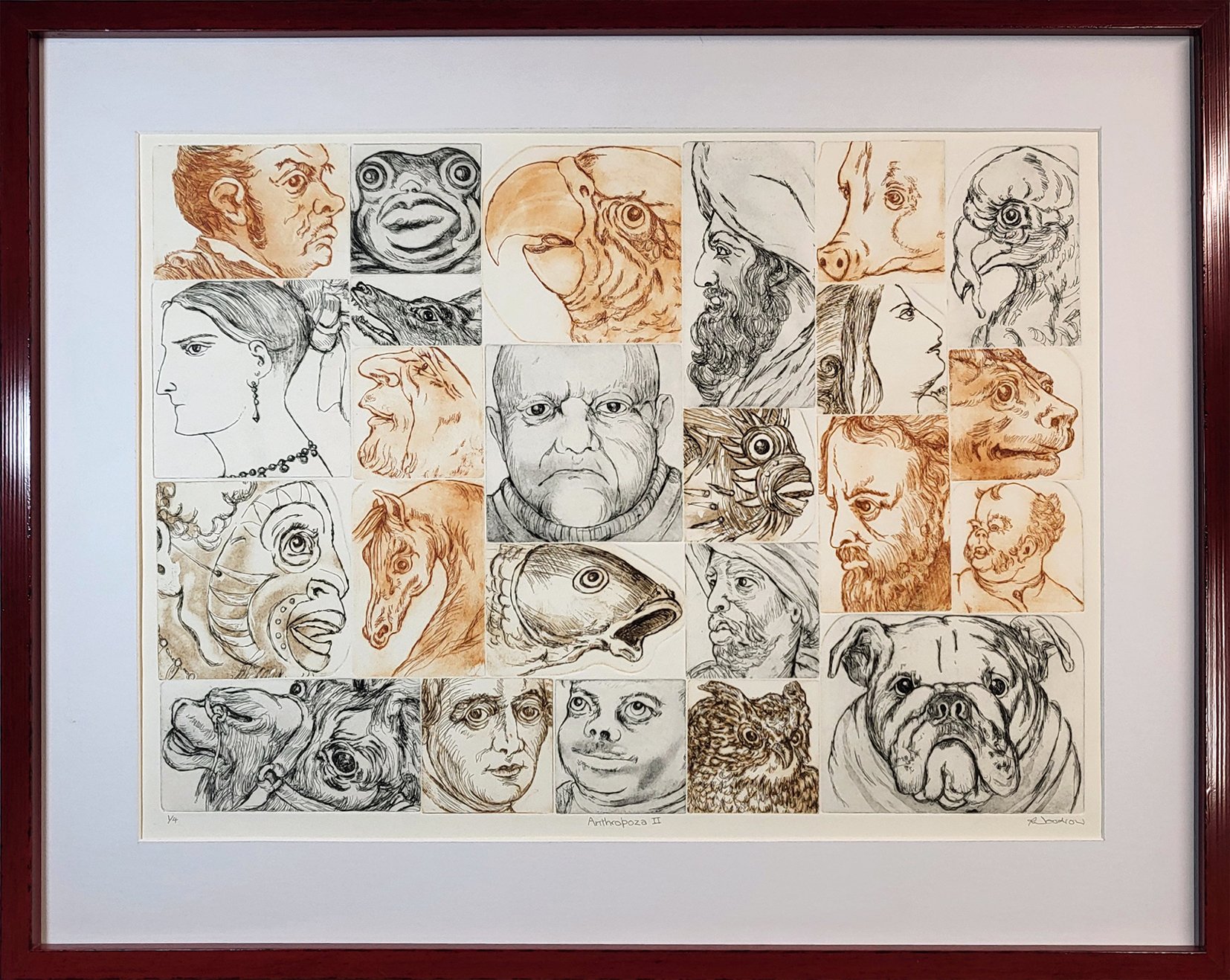
Continuing work on the classical themed works featured in my Parker Contemporary solo show last year along with the Gallery’s very successful showing last year at the Sydney Contemporary. Also shown by PARKER Contemporary at a recent PopUP gallery at Queens Wharf in Brisbane were examples of the recent Simian Empire series.


Shaped copper plates on the work bench at QCAD print studio at South Bank in Brisbane, Australia. The solvent bottle top centre gives an indication of the scale of each which is around 85 x 90 cm.

The Orders (Doric, Ionic and Corinthian) - triptych, shaped copper plates, etching on Hahnemühle 300gsm sheets c. 80 cm x 100 cm. Also printed as individual plates in different colour combinations on Hahnemühle and 300gsm Dutch Aquatint paper.


All etching and aquatint from shaped plates printed on Hahnemühle 300gsm sheets (dimensions variable c. 108 cm x 58 cm)

Model for a new globe (Hercules and Ajax fix the world) shaped copper-plate etching and aquatint (c120 cm high) on Hahnemühle 300gsm. [first state of this print] Not included in the Order from Ruins exhibition
Copyright © Ross Woodrow - All rights reserved - 2026.